


06/03/2026
7 min read
Order Types Explained Simply: Which Order Types Are There in Trading?

Order types determine how buy and sell orders are executed. An order is an instruction from an investor to a broker or exchange to buy or sell an asset such as stocks or cryptocurrencies. Limit orders, stop loss orders, stop limit orders and market orders are among the best-known order types on stock exchanges and broker platforms. In our guide, you’ll learn exactly what order types are, what other types exist and which order type may suit your trading strategy.
Order types explained simply: Order types determine when and at what price buy or sell orders are executed on an exchange or through a broker.
Order types: The best-known order types include market orders, limit orders, stop loss orders and trailing stops.
Orders and the right strategy: While market orders are often used for fast execution, limit orders, stop orders and trailing stops are often used for fixed price targets and limiting potential losses.
Order types for stocks and ETFs: Many order types work similarly for stocks and ETFs as they do for cryptocurrencies. The main differences lie in the volatility and speed of price movements in the respective markets.
What Are Order Types?
Put simply, order types are rules for executing buy and sell orders on the stock exchange or in crypto trading. Different order types can help you align buys and sells more precisely with your trading strategy. For example, you can specify whether an order should be executed immediately at the current price or only activated once a certain price is reached. Which order type is suitable depends on your individual trading strategy, the asset and the market movement.
Not every exchange or crypto platform supports the same order types. Some brokers also offer so-called order modifiers, which allow you to set additional conditions for executing an order. Before trading, you should therefore check which functions and order modifiers are available on the platform you are using.
The Most Important Order Types at a Glance
Whether it’s a trailing stop order, market order or limit order, the different order types used on exchanges and broker platforms mainly differ in when and at what price an order is executed. To help you better understand the differences between the individual order types, let’s take a closer look at the most important ones and how they work.
Market Order
This order type is executed immediately at the best available market price. As soon as you place a market order, the exchange automatically looks for the current best buy or sell price for the respective asset. A market order is especially suitable when fast execution is more important than an exact price. In volatile markets in particular, however, the final execution price may differ from the price originally displayed.
What Is a Limit Order?
A limit order means that a buy order or sell order is executed only at a previously defined price or better. This order type is often used when buying or selling if you only want to buy an asset below a certain price or only sell from a defined selling price upward. If the specified limit is not reached, the order is not executed.
Stop Order
A stop order is only activated once a certain price is reached. The exchange then attempts to execute the buy or sell order as quickly as possible at the current market price. Traders often use stop orders to react to specific price movements or protect existing positions. Because execution takes place at the current market price after activation, the final price may differ from the desired price during strong price fluctuations.
Stop Loss Order
A stop loss order is designed to limit potential losses during sharp price declines. If the price of an asset falls to a previously defined level, a sell order is automatically triggered. Especially in volatile markets, a stop loss order can help you avoid having to monitor positions manually at all times. However, the actual selling price may be below the set price if the market moves very quickly.
What Is a Stop Limit Order?
A stop limit order is an order type that combines a stop order with a limit order. As soon as the specified stop price is reached, the system automatically activates a limit order at a previously defined limit price. With a stop limit order, you can define the maximum or minimum price at which an order should be executed. The key distinction between the stop price and limit price is that the stop price activates the order, while the limit price sets the execution boundary. If the set limit is not reached after activation, the order is not executed.
Stop Buy Order
Traders use a stop buy order when they want a buy order to be executed only above a certain price. This order type is often used to respond to rising prices or a breakout from a particular price zone.
As soon as the specified price is reached, the exchange or broker automatically triggers the buy order. In fast-moving markets, the actual purchase price may differ from the price originally set.
Trailing Stop Order
A trailing stop order automatically adjusts the price to the price movement of an asset. If the price rises, the order’s defined distance moves along with it. If the price falls, the value remains unchanged.
Many traders use trailing stops to protect gains already achieved during ongoing price movements without closing a position immediately. However, trailing stops do not provide complete protection against price fluctuations. During strong market movements, the final execution price may be higher or lower than the set price.
Take Profit Order
A take profit order is an order type that automatically closes a position once a previously defined target price is reached. Traders often use this order type so they do not have to monitor profits manually at all times.
Take profit orders are mainly used in short-term trading to implement planned price targets automatically. If the specified price is not reached, the order remains open until it is executed, deleted or automatically terminated.
OCO Order
An OCO order stands for “One Cancels the Other”. In this case, two orders are linked together. As soon as one of the two orders is executed, the system automatically cancels the other order.
One Cancels the Other orders often combine a stop loss order with a take profit order. This allows traders to prepare both a potential profit target and a potential loss limit at the same time. As soon as one of the two orders is executed, the broker or exchange automatically deletes the other order. This makes it possible to prepare different price scenarios simultaneously without having to manage both orders manually.
If Done Order
An If Done order also links two orders together. The second order only becomes active after the first order has been fully executed.
This order type is often used for more complex trading strategies. It allows traders to prepare several steps and automatically link certain orders to a previous execution. After a buy order has been executed, for example, another order is often activated automatically, such as a stop loss order or a take profit order.
New to Bitpanda? Register your account today!
Sign up hereOrder Types Compared: Limit Order vs Market Order and More
Some orders prioritise fast execution, while others work with fixed price limits. Which order type you should use depends primarily on your trading strategy and the current market situation.
Here are some examples of order types and suitable strategies:
Market order: suitable for quick buys and sells at the current market price
Limit order: often used when a buy or sell should only take place at a specific price
Stop loss order: used to limit potential losses during strong price movements
Take profit order: suitable when profits should be realised automatically once a certain target price is reached
Trailing stop order: automatically adjusts the price to ongoing price movements
OCO order: often combines profit targets and loss limits in a single order
Order Types for Stocks, ETFs and Cryptocurrencies
Many order types work similarly for securities such as stocks and ETFs as they do for cryptocurrencies. Nevertheless, the markets can differ significantly in terms of volatility and the speed of price movements.
When trading stocks and ETFs, prices often move more slowly than in the crypto market. Investors therefore frequently use limit orders to buy securities at specific entry prices or to set planned selling prices. In stocks, a limit order follows the same basic principle: it is executed only at the specified price or better.
Cryptocurrencies, by contrast, often react much more quickly to market movements. In short-term trading especially, many traders therefore also use stop orders, trailing stops or automated sell orders. Because of the high volatility, execution prices may deviate more strongly from the originally desired price.
Which Order Types Are Available at Bitpanda?
At Bitpanda, various limit orders for trading cryptocurrencies are available, among other options. They can help you plan buy and sell orders more precisely and set different price targets in advance.
Bitpanda Limit Orders combine the control features of a limit order with the automation of a stop loss order. You can set your buy and sell prices* both above and below the current market price. This can help secure potential gains and limit possible losses.
Protect your downside on every trade.
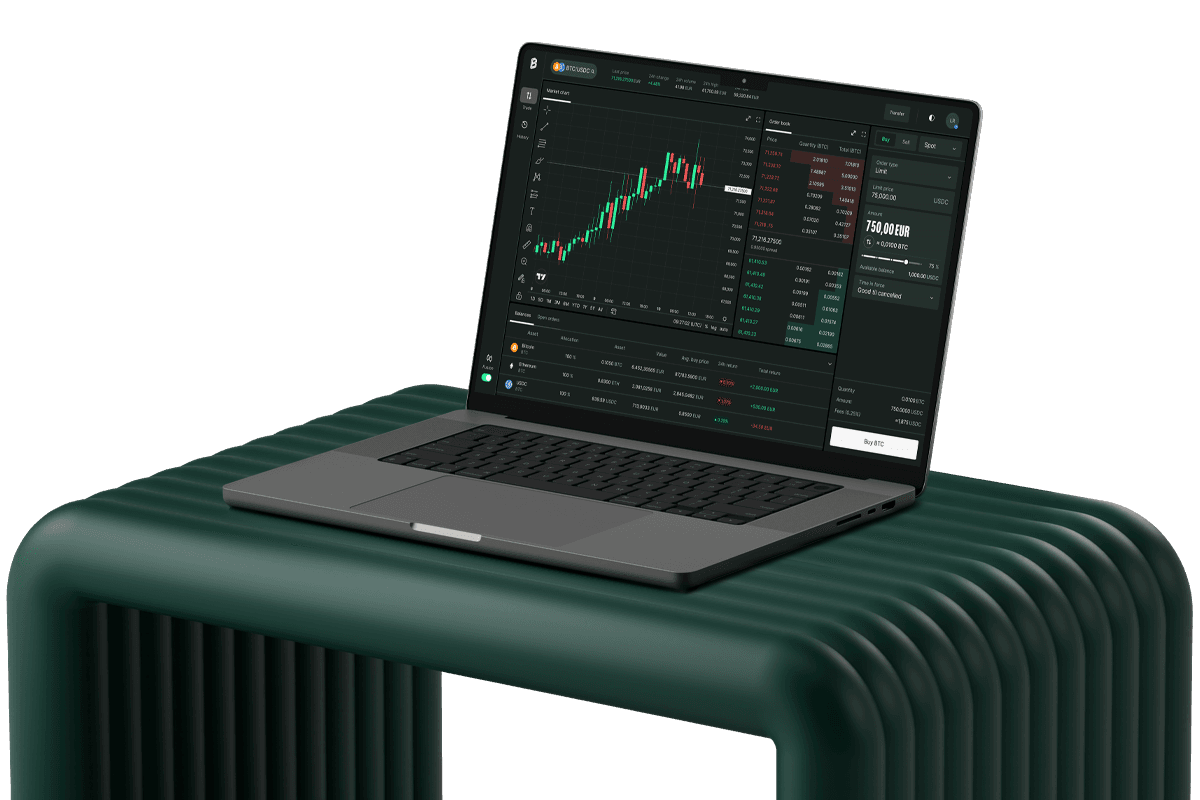
Execute precise Stop-Limit orders using TradingView charts on Fusion, or simply prompt Claude AI to manage your risk setup.
Conclusion: Order Types Help You Execute Trades More Precisely
Order types determine how an instruction is executed on an exchange or through a broker. Depending on traders’ and investors’ trading strategies, market phases and risk appetite, different order types can help place orders more precisely and define certain price conditions in advance. Especially when trading volatile assets such as cryptocurrencies, it is worth understanding exactly how the individual order types work before placing an order.
More Topics About Cryptocurrencies
Are you interested in investing and crypto topics? In the Bitpanda Academy, you’ll find numerous lessons on blockchains, investing in stocks, ETFs and crypto, as well as many other areas. Whether you’re a beginner, advanced learner or expert, you’ll find everything from initial research to in-depth topics.
Disclaimer
*Bitpanda Limit Order is fulfilled at the best available price, which could be higher or lower than the target price, especially in volatile markets. It is important to understand this risk when placing Bitpanda Limit Orders.
This article is distributed for informational purposes, and it is not to be construed as an offer or recommendation. It does not constitute and cannot replace investment advice.
Bitpanda does not make any representations or warranties as to the accuracy and completeness of any information contained herein.
Investing carries risks. You could lose all the money you invest.