


06/03/2026
7 min read
Slippage Explained Simply

Do you want to understand why your trading orders are sometimes executed at a different price than expected? This is exactly where slippage comes in. Whether you are trading cryptocurrencies, forex, stocks, or other securities, rapid price movements, low liquidity, or high volatility can cause the actual execution price to differ from your planned price. In this guide, you will learn what slippage in trading means, how this price deviation occurs, and how you can reduce the risk of slippage.
Definition: Slippage in trading refers to the difference between the expected price of an order and the actual execution price, caused by rapid market movements or price changes during order execution.
Causes: High volatility, low liquidity, market orders without a price limit, and delays in order execution are among the most common causes of slippage in trading.
Measures: Limit orders, an appropriate slippage tolerance, smaller order sizes, and trading in liquid markets can help reduce the risk of significant price deviations.
Pros and cons: Slippage can be either positive or negative. It can enable orders to be executed in fast-moving markets, but it can also lead to worse execution prices and higher risks.
Definition: What Is Slippage?
Slippage refers to the difference between the expected price of an order and the actual execution price. In trading, slippage occurs when the price changes between the time an order is placed and the time it is executed. It is especially common during periods of high volatility or low market liquidity.
Slippage can occur when trading cryptocurrencies, in forex trading, and when trading stocks and other securities. The size of the price deviation depends on market movement.
Types of Slippage
In trading, a basic distinction is made between positive slippage and negative slippage. Both types describe a difference between the expected price of an order and the actual execution price.
Positive slippage: The order is executed at a better price than originally expected. This can happen, for example, if the market moves in the trader’s favor during order execution.
Negative slippage: The order is executed at a worse price than planned, which often occurs during high volatility, rapid price movements, or low liquidity.
How Does Slippage Happen?
Slippage usually occurs when the market price changes between the placement of an order and its actual execution. Slippage in trading is especially common during high volatility, low liquidity, or rapid price movements.
The most common causes of slippage include:
High volatility: During turbulent market phases or after important news, prices can change significantly within seconds, causing the execution price to differ from the originally displayed price.
Low liquidity: If there are not enough buy or sell orders in the market at a specific price, the order is automatically executed at the next best available prices, which can lead to slippage.
Market orders without a price limit: A market order is executed immediately at the currently available market price and, during rapid price movements, can therefore result in a higher or lower execution price than originally expected.
Delays in order execution: Even short delays between placing an order and its processing by a broker or exchange can lead to price deviations during fast market movements.
Large order sizes: Very large orders can affect the available liquidity across multiple price levels in the order book, which may result in different execution prices.
Slippage in Forex Trading
Forex trading refers to trading currencies and is one of the largest financial markets in the world. Slippage in forex trading occurs particularly often because exchange rates in the foreign exchange market change around the clock and often react to news or economic events within seconds.
Typical causes of slippage in forex trading include:
Important economic events: News about inflation, key interest rates, or labor market data can trigger strong price movements, which often causes orders to be executed at a different price.
Exotic currency pairs with lower liquidity: While major currency pairs such as EUR/USD usually have high trading volumes, exotic currency pairs are more likely to experience larger price deviations.
Trading outside peak market hours: During periods of lower market activity, fewer buy and sell orders are often available, increasing the risk of slippage.
Leverage in forex trading: Because many traders use leverage in the forex market, even small price deviations can have a larger impact on profits and losses.
Slippage in Securities Trading
In securities trading, financial products such as stocks or bonds are bought and sold via exchanges. Slippage can occur when the price changes between the placement of an order and its actual execution, or when there are not enough buy and sell orders available at a specific price.
Important causes of slippage when trading stocks and other securities include:
Low trading activity in individual securities: Less frequently traded stocks or bonds often have lower liquidity, which means orders are more likely to be executed at different execution prices.
Strong price reactions to company news: Quarterly reports, company figures, or macroeconomic events can trigger sudden price movements and thereby increase the likelihood of slippage.
Trading during volatile stock market phases: Stronger price movements and higher trading volumes often occur especially at market open or shortly before the close of trading.
Market orders without a price limit: Market orders are executed immediately at the next available market price and can lead to price deviations during rapid price changes.
Slippage When Trading Cryptocurrencies
Slippage when trading cryptocurrencies occurs particularly often because crypto markets are open around the clock and often experience strong price fluctuations. Prices can change significantly within seconds, especially for coins or tokens with lower liquidity.
Common causes of slippage in crypto trading include:
High volatility in the crypto market: News, regulatory developments, or strong market movements can trigger large price changes within a short period of time.
Lower liquidity of individual coins and tokens: For less established cryptocurrencies, there are often not enough buy or sell orders available at a specific price, which can lead to larger price deviations.
High trading activity over short periods: When many traders place orders at the same time, the market price can change quickly during order execution.
Technical delays during execution: High network congestion or delays on trading platforms can result in orders being executed at a later, different price.
What Does Slippage Tolerance Mean?
Slippage tolerance defines how much the execution price of an order may differ from the originally expected price. It helps you as a trader limit the risk of large price deviations during rapid market movements.
Especially when trading cryptocurrencies or in volatile markets, the market price can change within seconds. With a defined slippage tolerance, an order is only executed if the price deviation remains within the specified range.
How slippage tolerance works:
Setting a maximum deviation value: Traders decide before order execution how much the actual execution price may differ from the original price.
Automatic check during execution: If the price deviation is within the defined tolerance, the order is executed.
Rejection if the price deviation is too large: If the market price exceeds the defined tolerance range, the order is usually automatically rejected.
A low slippage tolerance means more control over the execution price, but it can also mean that orders are not executed during volatile market phases. A higher tolerance, on the other hand, increases the likelihood of successful execution, but also brings a higher risk of larger price deviations.
At Bitpanda, the slippage tolerance is set to 5% by default. You can adjust this value individually before each order, lower if you want to maintain more control over the execution price, or higher to enable successful execution even during highly volatile market phases. This means that when trading on the Bitpanda platform, you always stay in control of how much your execution price may differ from the expected market price.
New to Bitpanda? Register your account today!
Sign up hereExamples of Slippage
The impact of slippage in trading can be seen particularly well in realistic trading situations. The following examples show how quickly the execution price of an order can change due to market movements.
Example of slippage in forex trading
A trader is following the release of new inflation data from the US and wants to buy the EUR/USD currency pair. Immediately after the release, however, the markets react within seconds with strong price movements. Although the order was originally placed at a price of 1.1050, it is only executed at 1.1065, resulting in negative slippage.
Example of slippage in securities trading
An investor places a buy order for a stock at a price of 100 euros. During execution, the price falls to 98 euros due to a sudden market movement. The order is executed at the lower price, resulting in positive slippage of 2 euros.
Example of slippage when trading cryptocurrencies
A trader wants to buy Bitcoin at a price of 90,000 euros. Due to high volatility in the crypto market, the price rises to 90,500 euros within a few seconds. The order is executed at the higher market price, resulting in negative slippage.
How significant slippage is depends, among other things, on volatility, liquidity, and the order type used. In the next section, you will learn how you as a trader can reduce the risk of slippage in trading.
How Can You Avoid Slippage?
Slippage cannot be completely avoided in trading, but the risk of significant price deviations can be greatly reduced with the right strategy. Especially in volatile markets or when liquidity is low, targeted measures can help you maintain more control over an order’s execution price.
Ways to reduce slippage include:
Using limit orders: Limit orders are executed only at a previously defined price or better, helping to limit unexpected price deviations.
Avoiding particularly volatile market phases: Strong price movements often occur around important news, economic events, or at market open, which increases the risk of slippage.
Choosing liquid markets: Markets with high liquidity, such as major currency pairs or heavily traded stocks and cryptocurrencies, usually offer less fluctuating prices and smaller price deviations.
Adjusting slippage tolerance: With a defined slippage tolerance, traders can determine how much the actual execution price may differ from the original order.
Smaller order sizes: Large orders can affect several price levels in the order book and may therefore cause stronger slippage.
Fast and stable trading platforms: Fast order execution can help reduce delays between order placement and execution. For this, you can use platforms such as Bitpanda Fusion.
Pros and Cons of Slippage
Slippage can have both positive and negative effects in trading. Whether slippage is beneficial or disadvantageous for you as a trader depends, among other things, on the market situation, liquidity, and the order type used.
Pros of slippage
Positive slippage: In some cases, an order is executed at a better price than originally expected, making lower purchase prices or higher selling prices possible.
Order execution despite rapid price movements: Orders can still be executed in volatile markets, even if the market price changes during execution.
Cons of slippage
Negative slippage: An order is often executed at a worse price than planned, which can lead to higher costs or lower profits.
Less predictable trading results: Significant price deviations can make it harder to calculate entry and exit prices.
Higher risk during high volatility: Especially in volatile markets or when liquidity is low, rapid price movements can lead to unexpected losses.
Greater impact with large orders: Large positions can affect several price levels in the order book and may therefore cause stronger slippage.
Conclusion: Why Slippage Matters in Trading
Slippage is one of the typical risks in trading and can occur in all markets — from forex trading and securities trading to cryptocurrency trading. Especially during volatile market phases or when liquidity is low, even small price movements can cause orders to be executed at a different price than originally expected.
For you as a trader, it is therefore important to understand how slippage occurs and which factors increase the risk of price deviations. Above all, the selected order type, market conditions, and market liquidity can have a major influence on order execution.
Even though slippage cannot be completely avoided, limit orders, an appropriate slippage tolerance, and conscious risk management can help you maintain more control over order execution. Especially in a fast-moving trading environment, a better understanding of slippage can help you assess risks more realistically and avoid common mistakes when placing orders.
Minimize Slippage with Aggregated Liquidity
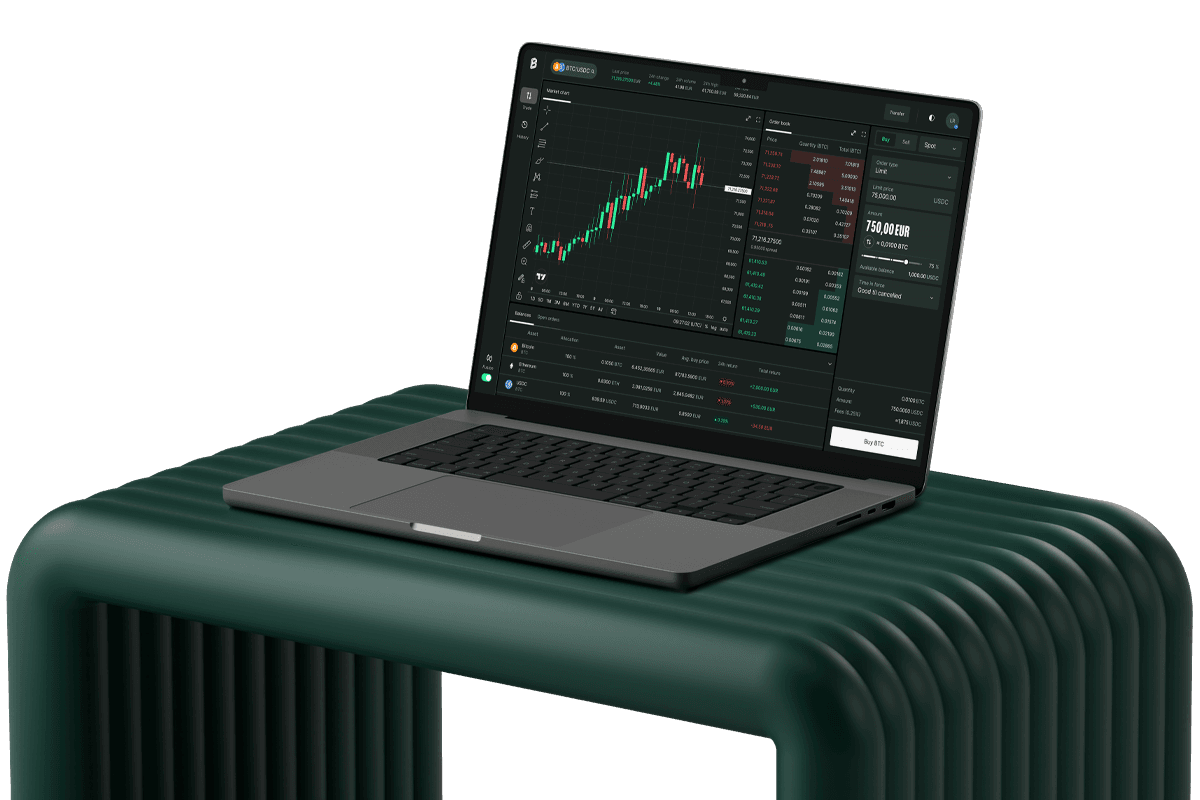
Single-venue order books often lack depth, resulting in costly price impact on larger trades. Bitpanda Fusion routes your orders across 12+ global markets simultaneously to capture deep, consolidated liquidity and secure optimal order execution.
More topics about trading
Would you like to learn more about how to place your orders more precisely and keep a closer eye on price deviations when trading? In the Bitpanda Academy, you’ll find further guides on order types, market conditions and trading basics that help you make informed decisions and better assess risks.