How Is a Company’s Liquidity Measured?
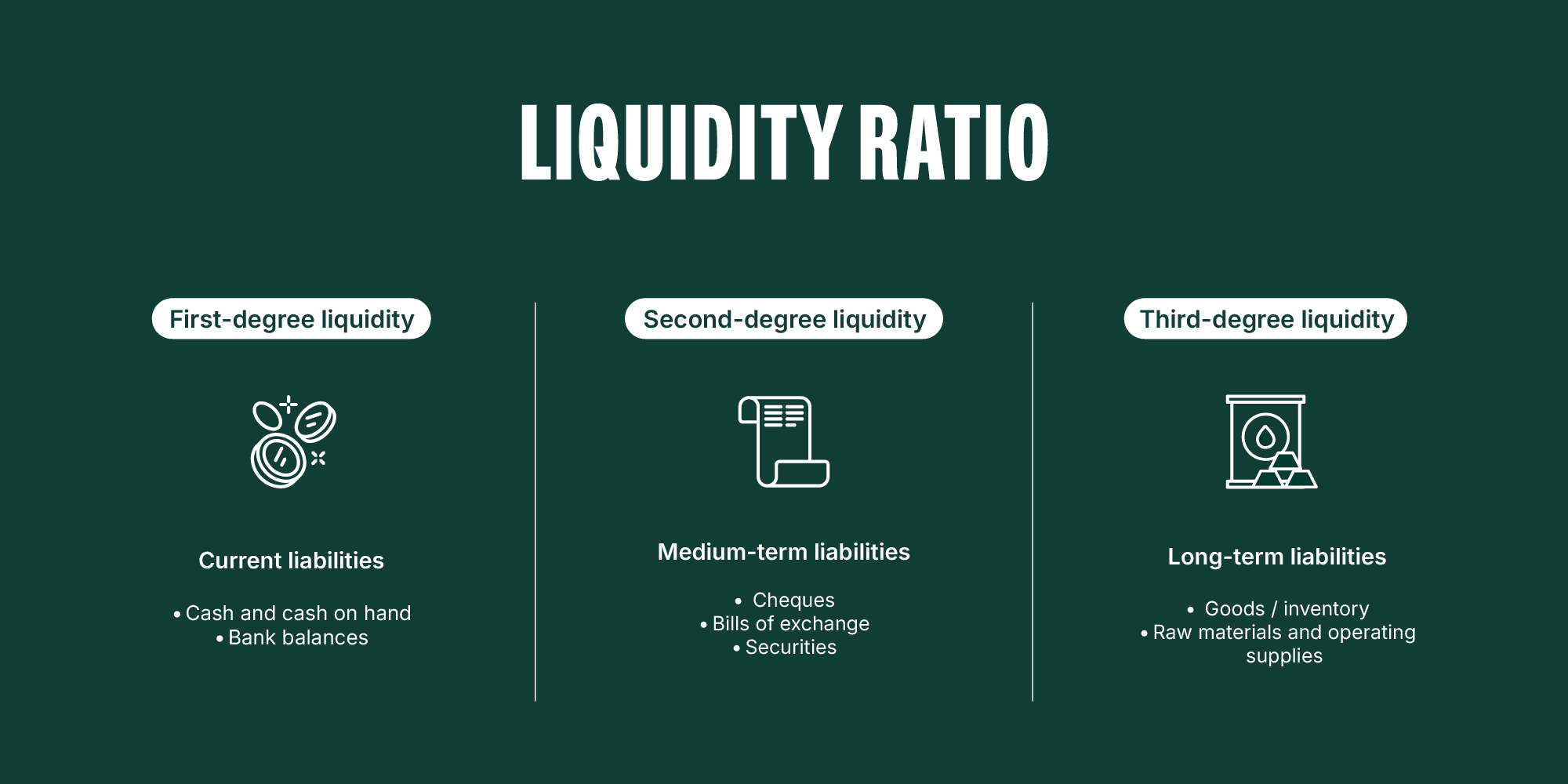
A company’s liquidity is measured using various key figures. The liquidity ratios are especially important because they show how well short-term liabilities can be covered by existing assets.
Liquidity is often calculated using the following formulas:
First-degree liquidity: liquid assets ÷ short-term liabilities
Second-degree liquidity: (liquid assets + short-term receivables) ÷ short-term liabilities
Third-degree liquidity: current assets ÷ short-term liabilities
The result is usually given as a percentage. A value of 100% or more means that, mathematically, a company can fully cover its short-term liabilities with existing assets.
In addition to liquidity ratios, companies use other key figures to assess their financial liquidity:
Measures whether a company can settle its short-term liabilities using only immediately available cash resources. This metric therefore focuses on especially liquid assets such as cash or bank balances.
Shows how much liquid cash a company generates through its ongoing business activities. Positive operating cash flow can indicate that ongoing costs, liabilities, and investments can be paid for from operating activities.
Why Is Liquidity Important for Companies?
A company’s liquidity affects whether ongoing costs can be paid, investments can be made, and financial obligations can be met. Even profitable companies can run into difficulties if they do not have enough liquid assets available in the short term.
Sufficient liquidity is important for companies for several reasons:
Invoices, salaries, and ongoing costs can be paid on time.
Short-term liquidity shortages can be managed more effectively.
Companies can respond more quickly to unexpected expenses.
Investments and growth plans can be implemented more easily.
Companies remain financially more flexible and can respond to changes faster.
Banks and business partners often view companies with good liquidity more positively.
Liquidity can also be important for you as an investor. Companies with financial problems often have to postpone investments or take on additional financing. In the long term, this can affect a company’s economic development and therefore its value.
What Happens When There Is a Lack of Liquidity?
A liquidity shortage occurs when a company does not have enough liquid assets or assets available in the short term to pay outstanding liabilities on time. This can restrict a company’s solvency. Common causes of liquidity bottlenecks include late incoming payments, unexpected expenses, or inadequate liquidity planning.
The most common consequences of a liquidity shortage are:
Late payments: Invoices, salaries, or ongoing costs cannot be paid on time.
Additional costs: Reminder fees or default interest increase the financial burden.
Lower creditworthiness: Low liquidity can worsen a company’s credit rating.
Financing needs: Companies may have to take out short-term loans or obtain additional financing.
Loss of trust: Banks, suppliers, and business partners may lose confidence in the company.
Insolvency: In the worst case, a persistent lack of liquidity can lead to insolvency.
Conclusion: Liquidity Planning Is Very Important for Companies
Available liquidity affects how flexibly companies can respond to changes, unexpected costs, or economically difficult periods. Companies that plan income, expenses, and available funds early can better assess financial risks and make necessary decisions more quickly.
The different liquidity ratios help provide a realistic assessment of a company’s financial situation. This can be relevant not only for companies themselves, but also for you as an investor when evaluating a company’s economic development.
Liquidity also plays an important role in financial markets and cryptocurrencies, as it often affects how quickly assets can be bought, sold, or converted into other funds.